


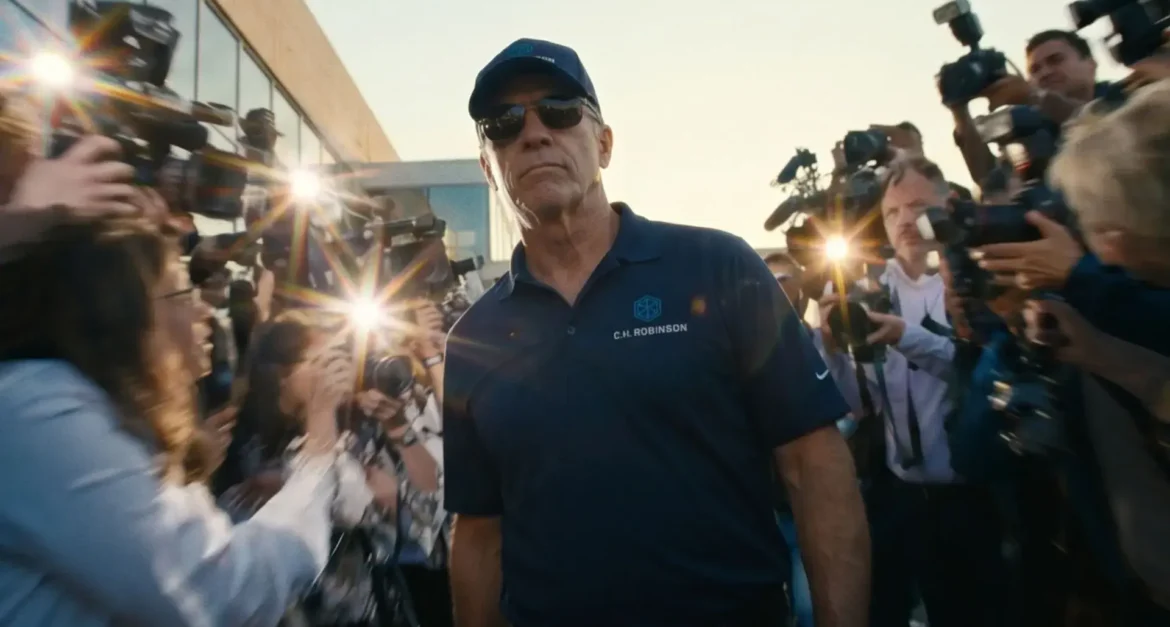
Let me tell you something that’s been burning a hole in my stomach since April 12th.
CBS’s 60 Minutes dropped a segment that sent shockwaves through the trucking world, and if you missed it, here’s the short version: a company called Super Ego Holding had been running what investigators call a “chameleon carrier” scheme. New name. Same trucks. Same bad record. Rinse, repeat. The data from FMCSA and analytics firm Fusable showed roughly 15,000 safety violations and 500 accidents tied to Super Ego-affiliated carriers over just two years. One of those crashes critically injured children.
And here’s the part that made people spit out their coffee: just months earlier, mega-broker C.H. Robinson had named Super Ego its 2025 Carrier of the Year in the 1,000+ trucks category.
Yeah. You read that right.
So the question everyone’s asking, from owner ops to lawyers to Capitol Hill, is simple: How does that happen? And more importantly, what does it mean for you?
The Setup: What Is a Chameleon Carrier, Exactly?
If you’ve been around the industry a while, you already know the type. A carrier racks up violations, gets shut down by the FMCSA, then pops back up six weeks later with a fresh DOT number and a clean slate. It’s like a cockroach in work boots.
The GAO flagged this problem back in 2009, and again in 2012, pushing FMCSA to expand its new-entrant vetting program to freight carriers, not just passenger and moving companies. Some improvements were made, but resource constraints left huge gaps. As of today, FMCSA has roughly 350 investigators covering 700,000 active carriers. You do the math.
Super Ego’s play was sophisticated. They branded themselves as a leasing company, not a carrier. They’d lease trucks to over 1,200 “licensed carrier companies,” each with their own DOT authority, while Super Ego logos plastered the sides of the trailers. From the outside, you’d swear they were running a massive fleet. From a legal standpoint? They claimed zero operational responsibility.
Enter C.H. Robinson – and the Award That Aged Poorly
In September 2025, C.H. Robinson publicly announced its Carrier of the Year winners, and Super Ego took the top spot in the 1,000+ trucks category. The criteria, per CHR’s own blog, focus on on-time delivery, technology adoption, and “going above and beyond to support shippers’ needs.” No specific mention of safety audits or ownership verification.
When the 60 Minutes report dropped, CHR issued a formal statement emphasizing that they “only work with carriers authorized by the federal government” and rely on FMCSA’s vetting to ensure carrier safety. Their defense boils down to: we’re a middleman, not a cop.
And legally speaking? They’re not wrong. That’s the uncomfortable truth at the heart of this whole mess.
What the Law Actually Says (And Where It Falls Apart)
Here’s where we need to slow down and look at the scoreboard.
Under current federal law – specifically the 1994 Federal Aviation Administration Authorization Act (FAAAA) – brokers are legally distinct from motor carriers. Brokers don’t own trucks. They don’t hire drivers. Their job is to match freight with FMCSA-authorized carriers. The safety enforcement? That’s supposed to be FMCSA’s lane.
But courts across the country have been fighting about this for years. The Seventh and Eleventh Circuits say negligent-hiring claims against brokers are preempted, meaning you can’t sue a broker under state law for picking a bad carrier. The Ninth and Sixth Circuits? They say you can. That’s a split that’s been sitting unresolved, and it’s exactly why the Supreme Court agreed to hear Montgomery v. Caribe Transport – argued in March 2026, ruling expected by summer.
That case will essentially decide: If a broker picks a carrier that causes an accident, is the broker on the hook?
If the answer is yes, expect brokers to overhaul their vetting overnight. If no, expect the status quo to limp along while chameleons keep reincarnating.
If you want to understand how this kind of legal uncertainty affects the money in your pocket, our breakdown of broker transparency rules and how to protect yourself if a broker goes bankrupt are worth bookmarking.
The Three Positions Nobody Can Agree On
Here’s a clean breakdown of where everyone stands:
| Party | Position | Key Argument |
|---|---|---|
| C.H. Robinson | Brokers aren't liable | "We use FMCSA-vetted carriers. Safety enforcement is a federal job." |
| Super Ego Holding | We're a leasing company | "We don't operate trucks or hire drivers - that's on the carrier companies." |
| FMCSA / Regulators | We're stretched thin | "Only ~350 investigators for 700,000 carriers. We need more resources and better laws." |
| Drivers & Victims | Everyone failed us | "Brokers kept sending loads. Someone had to know." |
| Legal Experts | SCOTUS will decide | "Montgomery v. Caribe is the ruling that changes everything." |
| Industry Associations (TIA) | Vet better, but carefully | "Best practices matter, but brokers can't substitute for federal oversight." |
Super Ego’s Defense: Technically Creative, Practically Convenient
Super Ego’s official response, published via Serbian Times and picked up by Commercial Carrier Journal, was essentially: Don’t look at us. Look at the carriers who lease from us.
They claim to lease to over 1,200 licensed carrier companies, each with their own authority and responsibility for drivers, safety compliance, and everything that goes wrong on the road. Super Ego says it never supervised drivers, never authorized hauls, and never co-opted rate confirmations.
The problem? Overdrive noted that Super Ego’s claim of running 1,000+ trucks is not supported by U.S. DOT filings. So how did they qualify for CHR’s 1,000+ trucks category? That’s a question still sitting unanswered.
A former colleague of mine, a dispatcher who ran a small fleet in the Midwest – used to say: “If it smells like a carrier, hauls like a carrier, and parks like a carrier, don’t let the paperwork tell you it’s a library.” The leasing model may be technically defensible. But when your trailers are everywhere and your liability is nowhere, something doesn’t add up.
What Brokers Are Actually Required to Do (And What They’re Not)
This is the part that’ll frustrate you, because the answer is: not that much.
Brokers must:
- Hold a valid FMCSA operating authority
- Maintain a $75,000 surety bond (thanks to MAP-21 in 2012)
- Work only with FMCSA-authorized carriers
- Have contracts explicitly prohibiting double-brokering
Brokers are not required to:
- Audit carrier financials or ownership structures
- Verify whether a carrier’s trucks match its DOT filings
- Conduct site visits or driver interviews
- Monitor safety scores beyond what FMCSA publicly provides
Groups like the Transportation Intermediaries Association (TIA) push brokers to go further – checking inspection histories, flagging carriers with multiple DOT numbers from the same address, watching for frequent name changes. But that’s a recommendation, not a mandate.
CHR claims it follows strict vetting and that among the hundreds of billions of miles booked through their network, serious accidents occur at a rate of one per 500 million miles. That’s a number they’re proud of. Whether that defense holds up after naming a chameleon operator Carrier of the Year remains to be seen.
Speaking of carrier reputation, if you’ve ever dealt with a FreightGuard report or a black mark on your carrier profile, you know how fast your reputation can tank. Check out how to remove a FreightGuard or Carrier411 report if you’re fighting that battle yourself.
What This Means for Owner Operators and Small Carriers
Let’s be direct. If you’re running your own authority, this story should make you think about a few things:
Your reputation is everything. If a chameleon carrier with your trailer type and region is racking up violations, brokers may quietly start avoiding that lane. Guilt by association is real in this industry, even when it’s unfair. Keeping your DOT inspection record clean and your pre-trip inspections airtight is non-negotiable.
Know who you’re hauling for. Double-brokering is illegal and explicitly banned by CHR’s own carrier contracts. If a load sounds off, unfamiliar broker, rate confirmation that doesn’t match the original, that’s a red flag. Our breakdown of what double brokering is and how it works is worth a read if you’re not 100% sure where the lines are.
The spot market is still the Wild West. With spot rates fluctuating and brokers competing hard for loads, the pressure to move freight fast sometimes outpaces the pressure to vet carefully. That’s a math problem that eventually shows up as a safety problem.
The Verdict – or Lack Thereof
Here’s the honest answer nobody wants to give: the system isn’t working, and nobody’s fully responsible.
FMCSA is underfunded and overwhelmed. Brokers are operating within the law but arguably below the standard of care the public expects. Chameleon carriers are exploiting regulatory gaps that have existed for decades. And drivers – the ones doing the actual work – are the ones most exposed when things go wrong.
The Supreme Court’s decision on Montgomery v. Caribe Transport will shift the landscape. If brokers can be sued for negligent carrier selection, every brokerage in America will scramble to tighten its vetting process. If preemption holds, expect more of the same, and more investigative reports asking how the industry keeps letting this happen.
In the meantime, protect yourself. Know your brokers. Understand your rights. And if you’re working with a carrier or considering a lease, do your own homework, don’t assume the broker did theirs.
If you’re thinking about what it really means to partner with a small carrier or go independent, our deep dives on owner operator partnerships with small carriers and the biggest mistakes owner-operators make are two of the most practical reads on the site.
The road doesn’t care who’s supposed to be watching. It just keeps moving.


