


Follow us on youtube for more valuable content:
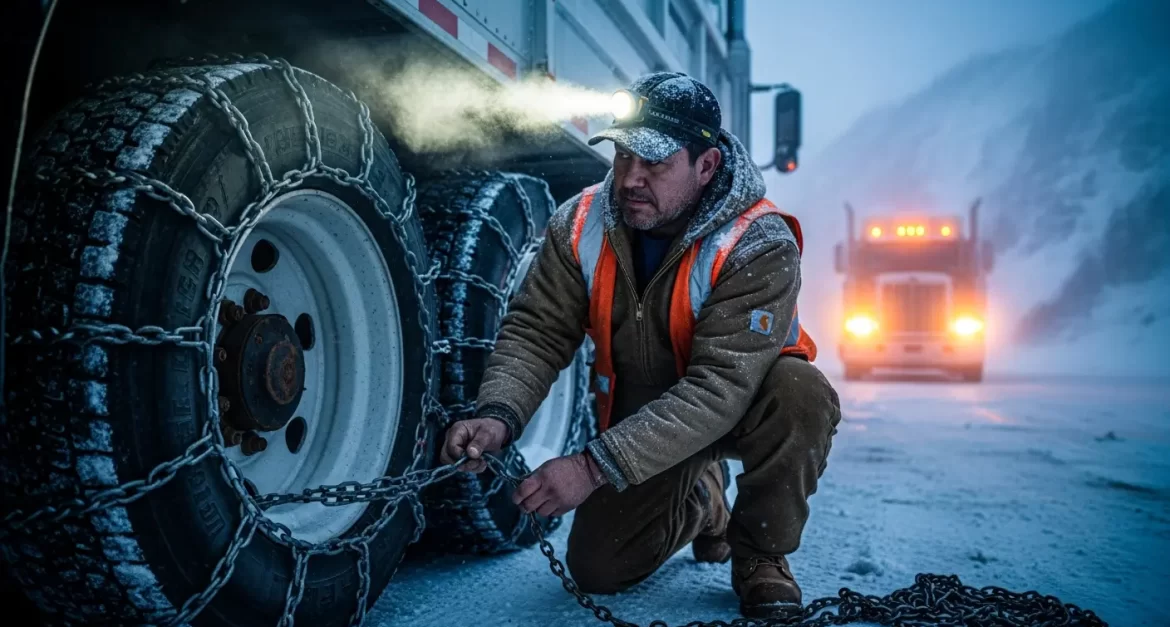
Nobody’s excited about chaining up at 2 AM in a blizzard on Donner Pass. But run mountains in winter long enough, and it’s coming for you. I’ve watched drivers waste an hour wrestling tangled chains while traffic stacks up behind them. Meanwhile, the guy two spots over zips through the process in 15 minutes flat. The difference? Preparation, the right gear, and a system that works.
This guide covers everything—state regs, chain types, installation, and the gear you need on board. If you’re running winter routes, consider this required reading
Chain Laws: Know Before You Go
Chain laws vary by state, and getting caught unprepared can cost anywhere from a citation to a $1,000 fine in Colorado if you block traffic. Here’s what the big three mountain states expect:
Colorado runs a two-level system on I-70 through the Rockies. All commercial trucks must carry chains September 1 through May 31. Level 1 means single-drive-axle trucks chain all four drive tires; others need snow tires or chains on board. Level 2? Chain the outer tires on both drive axles, plus at least one tire each side of the trailer.
California doesn’t mess around. A standard tractor-trailer needs at least 8 chains for severe conditions. Caltrans uses three levels: R1 (drives only), R2 (drives and trailer—most common), and R3 (everything, no exceptions). Show up to a checkpoint without proper chains and you’re getting turned around.
Oregon requires at least 6 chains. When signs light up, expect four on the drives and two on the trailer. Skip this and you’re looking at an $880 Class A violation.
Picking the Right Chains
Not all chains are equal. What works in Utah might be overkill for occasional Tennessee snow. Here’s the quick breakdown:
| Chain Type | Traction | Durability | Ride | Best For |
|---|---|---|---|---|
| Ladder-Style | Good forward bite | Good | Bumpy | Budget, all-around |
| Square Link | Excellent on ice | Excellent | Moderate | Frequent mountain runs |
| V-Bar | Superior on glare ice | Good | Rough | Extreme ice, steep grades |
| Diamond | Great multidirectional | Very Good | Smooth | Long chain-ups, comfort |
| Cable | Moderate | Low | Smooth | Emergency only |
Quick note on cables versus real chains: cables are lighter and easier to throw on, but they don’t cut it for heavy trucks in serious conditions. Colorado prohibits standard cables on commercial trucks during Level 1 chain law. For regular mountain work, invest in real chains—square links if you want longevity, or diamond pattern if you’re doing extended chain-ups and want to save your kidneys.
Manual vs. Auto-Tensioning
Manual chains require a stop-and-recheck after driving a short distance. Most drivers use rubber bungee tensioners—the “spiders”—to keep things snug. Auto-tensioning chains have built-in spring or ratchet systems that adjust continuously. They cost more but save hassle if you’re chaining frequently. Either way, loose chains slap against your rig, wear out fast, and can damage brake lines.
The Chain-Up Process That Works
I once watched a driver at Eisenhower Tunnel spend 45 minutes fighting tangled chains in a snowstorm—wrong size, no gloves, total mess. The guy next to him was done in 15 and rolling. Difference was prep and technique. Here’s the system:
- Find a Safe Spot. Use designated chain-up areas. Hazards on, brakes set, reflective vest before you step out. This isn’t optional—people get hit doing roadside work.
- Lay Out and Untangle. Spread each chain flat next to its tire. Cross-chains shouldn’t be twisted, hooks facing outward. Two minutes here saves ten minutes of cursing.
- Drape Over the Tire. Grab the middle, lay it over the top. Both ends should hang evenly. Center the cross-chains across the tread.
- Connect Inside First. The hard part—reaching behind to fasten the inner connector. Get it done while your fingers still work. Don’t put your head under the tire.
- Connect Outside and Tension. Hook the outer chain tight. Use your cam wrench on the tensioners, attach rubber bungees in a star pattern. Should have a finger’s worth of play—no more.
- Roll Forward and Recheck. Drive 100 feet slowly, stop, and re-inspect everything. The truck’s weight shifts the chains. Retighten loose spots. Skip this and you’ll be stopping again in a mile—or fishing a broken chain out of your fender.
Golden Rule: Chain your drives first—always. They propel the truck and provide engine braking. Add trailer chains if conditions or law require it. Steer chains are rarely needed and can mess with your steering feel.
Gear You Need On Board
This is what separates prepared drivers from the ones calling for a tow:
- Heavy-duty waterproof gloves (plus a spare pair)
- Reflective vest and headlamp for roadside visibility
- Cam tightening tool (the L-shaped wrench)
- Rubber tensioners/bungees for all chained wheels
- Spare links and pliers for emergency repairs
- Kneeling pad —your knees will thank you
Keeping Your Chains Road-Ready
Chains aren’t cheap, and the last thing you want is failure halfway up a grade. After each use, knock off the salt and slush, then dry them thoroughly before storage. Moisture plus road salt equals rust. A light coat of WD-40 works wonders for prevention.
Inspect before each season—cracked links, worn sections, bent hooks. Replace anything questionable. A broken chain flying off can take out lights, air lines, and fenders. Store in a dedicated tote to prevent tangling, and remove chains as soon as you hit clear pavement. Running chains on dry roads destroys them fast. Keep it under 25-30 mph when chained—faster speeds accelerate wear. This falls right in line with your broader tire maintenance routine—take care of your rubber and it takes care of you.
Bottom Line
Chaining up will never be fun, but it doesn’t have to be a nightmare. Practice in your yard before winter. Know the regs for every state on your routes. Invest in chains that match your operation. Most importantly, don’t wait until you’re sliding sideways. When those signs light up, pull off and get it done. Twenty minutes of prep beats two hours waiting for a wrecker.
Stay safe, keep your chains ready, and may all your grades be dry.


