


Follow us on youtube for more valuable content:
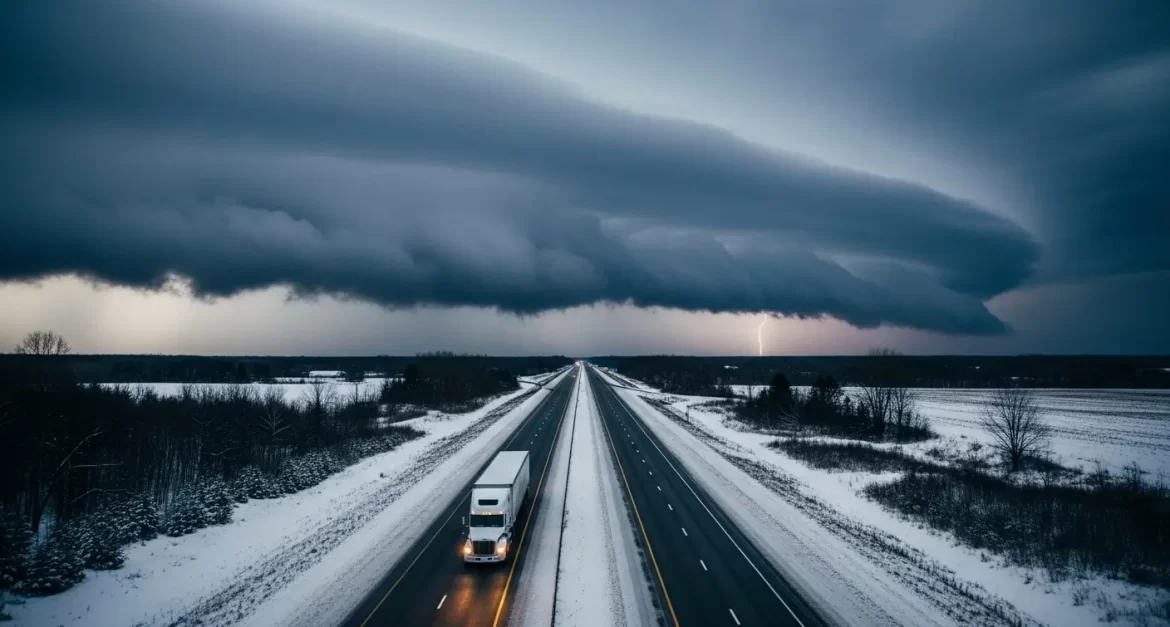
Listen up. Winter’s coming, and if you’re still dispatching like it’s July, you’re about to learn some expensive lessons. Nearly a quarter of all trucking delays are caused by weather disruptions, and that’s costing the freight industry billions every year. I’m not here to sugarcoat it – winter dispatching separates the pros from the pretenders faster than black ice on an overpass.
The difference between a novice dispatcher and someone who knows their stuff? The novice reacts after trucks are stuck on closed highways. A pro dispatcher is rerouting before the first snowflake hits the windshield, warning customers about delays before they even ask, and has contracts locked down tighter than a reefer seal.
Here’s the real deal on how to weather-proof your dispatch operation and keep those wheels turning when everyone else is playing catch-up.
Stop Trusting GPS Alone – Start Reading Weather Like Your Paycheck Depends On It
Your standard routing software? It’s about as useful as a paper map in a rainstorm when winter hits. Sure, GPS will tell you the fastest route from Point A to Point B, but it won’t tell you that I-90 through the Rockies is about to turn into a parking lot because a blizzard’s rolling in.
Smart dispatchers layer live weather data onto their routing decisions before trucks even roll out of the yard. Modern route optimization tools overlay real-time weather conditions right onto your routes. You can spot that brewing storm system three states away and make the call to send your driver south instead of through that mountain pass that’s about to close.
Here’s the thing about weather – it cuts highway capacity by 30% when it’s raining hard, and flooding can jack up delays by 90%. But the companies that plan backup routes and use intelligent transport systems to reroute in real time? They’re keeping their service commitments while their competition is making excuses.
The $8,000 Lesson: Back in 2019, I worked with a small carrier out of Nebraska. Their dispatcher, Jake, had a load heading to Denver – standard run, done it a hundred times. Jake punched it into the GPS, sent the driver on his way at 4 PM. Problem was, Jake didn't check the weather forecast. By midnight, that driver was stuck on I-76 in a whiteout with fifty other trucks. Roads closed for eighteen hours. The load was two days late, customer refused delivery, and between the detention charges, the repositioning costs, and the lost business, that one mistake cost north of $8,000. All because Jake trusted GPS instead of checking a weather map.
The smart play? Check forecasts three, four, even five days out. Chart your contingency routes before you need them. If you’ve got a load going through the Midwest in January, you better have a southern route mapped as backup. When that weather system shows up on radar, you make the call to reroute before your driver’s even loaded. That’s not being paranoid – that’s being professional. And while you’re at it, think about how to minimize deadhead miles on those alternate routes – winter delays are expensive enough without burning fuel on empty trailers.
The Bad News Call: How to Tell Customers Their Freight’s Running Late Without Torching the Relationship
Nobody likes making the delay call. I get it. But here’s what separates dispatchers who keep their customers from dispatchers who lose them: timing and honesty.
The golden rule? Bad news delivered early beats good excuses delivered late, every single time. Your customer would rather hear “We’re expecting a 12-hour delay because of the ice storm in Ohio” at 8 AM than “Where’s my freight?” at 5 PM when it’s supposed to be on their dock.
Here’s how you make that call without sounding like an amateur:
1. Call them before they call you. Soon as you know there’s a delay coming – and I mean know, not when it’s already happened – pick up the phone. Don’t wait for them to check the tracking portal and blow up your line.
2. Give specifics, not corporate-speak. “Unforeseen circumstances” is dispatcher-talk for “I don’t want to tell you.” Say it straight: “I-90 through the Rockies is closed due to a blizzard. Our driver is rerouting south through Wyoming, and we’re looking at a 12-hour delay from the original ETA.” Customers can work with facts. They can’t work with vague BS.
3. Lead with the solution. Don’t just tell them what went wrong – tell them what you’re doing about it. “We’ve rerouted the driver, we’re monitoring conditions hourly, and I’ll update you again at 2 PM with a revised ETA.”
4. Use multiple channels. Phone call for the initial bad news, then follow up with an email so they have it in writing. If it’s a widespread weather event affecting multiple customers, post an advisory on your website or social media.
The Communication Win: Last February, I watched a dispatcher named Maria handle a nightmare scenario like a seasoned pro. She had three loads going into the Northeast right as a major ice storm was tracking in. At 6 AM – six hours before the first truck was even scheduled to hit the affected area – Maria called all three customers. She explained the situation, gave them realistic revised ETAs, and promised updates every four hours. One customer actually thanked her for the heads-up and adjusted their receiving schedule. Another one referred two new customers the following month because, as he put it, "You guys don't sugarcoat things, and I appreciate that." That's the power of honest communication – it turns a weather crisis into a trust-building moment. And Maria didn't forget her drivers either. She checked in with each one, made sure they had safe parking options if they needed to shut down, and ensured they had working APU units so they wouldn't burn through fuel idling in the cold. That kind of dispatcher support is exactly what keeps good drivers from jumping ship – and we all know driver retention matters more than ever.
Research backs this up. Companies that fail to communicate delays don’t just deal with angry phone calls – they lose customers permanently. But consistent transparency? That builds loyalty that survives way more than a winter storm.
Proactive vs. Reactive: The Dispatcher’s Winter Report Card
Want to know if you’re doing winter dispatching right? Here’s the comparison that’ll tell you everything. Where do you fall on this chart?
| Aspect | Proactive Dispatcher | Reactive Dispatcher |
|---|---|---|
| Weather Monitoring | Checks forecasts 3-5 days ahead; uses weather overlay tools with routing software | Relies on GPS alone; learns about storms when driver calls from closed highway |
| Route Planning | Maps primary AND backup routes before dispatch; adjusts based on forecasts | Uses same routes year-round; scrambles to find alternatives after delays occur |
| Customer Communication | Calls customers before potential delays; provides specific ETAs and updates | Waits for customers to call asking where their freight is |
| Driver Support | Warns drivers about weather ahead; discusses parking and timing options | Sends drivers into storms without warning; expects them to "figure it out" |
| Contract Management | Reviews force majeure clauses and accessorial terms before winter; discusses cost-sharing with customers | Discovers contract gaps when filing claims; argues about detention fees after the fact |
| Cost Control | Prevents detention, layover, and out-of-route charges through advance planning | Absorbs thousands in unexpected accessorial charges per storm |
| Reputation Impact | Builds trust and client loyalty; seen as reliable partner even during disruptions | Loses customers who feel blindsided; known for making excuses |
Look at that table and be honest with yourself. If you’re checking more boxes in the reactive column, you’re playing Russian roulette with your operation. The proactive approach isn’t harder – it’s just a different mindset. It’s about staying two steps ahead instead of two steps behind.
The Contract Conversation Nobody Wants to Have (But Everyone Should)
Here’s where most dispatchers zone out, but stay with me because this is where you either protect your company or pay for someone else’s mistakes. Two terms you need carved into your brain: Force Majeure and Weather-Related Accessorials.
Force Majeure is your “act of God” clause. When a legitimate disaster hits – we’re talking unprecedented blizzards, major flooding, hurricanes – this clause relieves you from breach of contract for late delivery. Sounds great, right? Here’s the catch: force majeure excuses the delay, but it usually doesn’t pay for the costs of that delay. This is one of those common mistakes that trips up even experienced carriers – assuming force majeure covers both liability AND costs.
Let me break that down. If a snowstorm shuts down highways for two days and you can’t deliver, a good force majeure clause means the customer can’t penalize you for being late. But your driver sitting idle for those two days? Your fuel burned on the detour? Those costs typically fall on you unless your contract specifically says otherwise.
Weather-Related Accessorials are all those extra charges that pop up when Mother Nature throws a punch. Detention fees when your driver’s stuck waiting out road closures. Out-of-route mileage when you have to detour 200 miles around flooding. Layover charges for an extra day on the road. These charges are often unforeseeable, popping up due to sudden weather events.
The question you need answered before winter hits: Who pays for what? Does your contract let you invoice the shipper for weather delays? Is there a detention clause after two free hours? What about that 200-mile detour – is that your cost or theirs?
Smart dispatchers hash this out in September, not in February when there’s already a $2,000 detention charge nobody wants to pay. Get your contracts to include a weather delay accessorial schedule. Spell out exactly what happens when roads close due to ice. Make sure both sides know who’s covering what costs when force majeure kicks in.
This isn’t about being difficult – it’s about preventing the kind of financial bloodbath that happens when two parties both think the other one’s paying for an expensive weather delay.
Winter Dispatching Is Really Just Year-Round Risk Management
Here’s the truth: if you’re only thinking about contingency planning when the Weather Channel starts tracking blizzards, you’re missing the bigger picture. Winter storms are just the most dramatic example of disruption. Same principles apply to flash floods in spring, hurricanes in fall, or that jackknifed semi that closes I-80 for six hours on a Tuesday in July.
The intermediate dispatcher – the one who’s got their operation locked down tight – looks ahead, communicates constantly, and sets up fail-safes in their contracts. They’re not reacting to problems; they’re actively mitigating risk before it becomes a crisis.
By using detailed weather data alongside your GPS, you’re routing based on reality, not just distance. By communicating bad news professionally and early, you’re turning potential disasters into trust-building opportunities. By ironing out contract clauses before winter hits, you’re turning legal headaches into routine, manageable events that don’t blow up your P&L.
Contingency planning isn’t a seasonal chore. It’s a way of operating that separates carriers who thrive from carriers who barely survive. The next time a winter storm barrels through, your trucks might still face delays – that’s reality. But you’ll have alternate routes mapped, customers already updated, and contracts backing you up. You’ll deliver on your promises (literally and figuratively) through thick and thin.
That’s the hallmark of a dispatcher who knows their stuff: moving beyond just reacting to problems, to actively keeping the supply chain running smoothly no matter what the forecast holds. Because at the end of the day, anyone can dispatch when the weather’s perfect and the roads are clear. The pros prove themselves when it’s 15 degrees, snowing sideways, and half the interstates are closed.
That’s when you find out what you’re made of. Don’t wait for winter to teach you – get proactive now.


